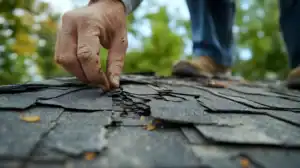
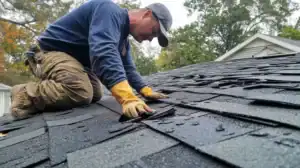
Shingle brittleness is a major factor in determining whether a repair can be safely completed. A shingle that’s too brittle may crack, tear, or break when lifted—making a spot repair difficult and potentially leading to more damage. Roofs with brittle shingles can be repaired, but typically only by replacing the entire slope or slopes with damaged shingles.
Understanding how to properly test for brittleness ensures that you’re making the safest, most cost-effective decision for the property and protecting everyone involved.
Part 1: What is Shingle Brittleness?
Shingle brittleness is the loss of flexibility in asphalt shingles over time due to age and weather exposure. While brittle shingles may still perform as intended, their rigidity makes repairs risky—and in some cases, not feasible without causing further damage.
Part 2: Step-by-Step: How to Perform a Brittleness Test
Step 1: Choose Your Test Area
Step 2: Check the Weather
Step 3: Wear Gloves and Use Care
Step 4: Observe the Response
Step 5: Repeat on Multiple Shingles
- Pro-Tip
Don’t rely on appearance alone. Even shingles that look intact can be too brittle for a successful repair. Always perform a hands-on test before finalizing your repair plan.
Part 3: When Is a Shingle Too Brittle to Repair?
If shingles:
- Crack immediately when lifted
- Tear along the nailing line
- Can’t be re-sealed securely after being lifted
…then the area may not be suitable for repair. In these cases, replacing the full slope—or affected slopes—may be warranted.